An A4 collection of pieces
The document has ten portrait pages, approximately 210 × 297 mm. Artwork is placed as images rather than editable text. It does not provide a complete assembly sequence or a letter alphabet for writing names. Reading the pieces first prevents printing shapes you will not use.
| Sheet | Visible content |
|---|---|
| 1 | Three triangular flags |
| 2 | Long tabbed shape |
| 3 | Six rectangular strips |
| 4 | Four divided rectangles |
| 5 | Large curved sector |
| 6 | Eight cards |
| 7 | One card and a tabbed shape |
| 8 | Two curved bands and four motifs |
| 9 | Fifteen circles |
| 10 | Four strips with coloured areas |
A minimal set, step by step
Choose a small goal: a garland, cards and circles. Tabbed shapes and curved bands are not needed for this set. Separate confirmed pieces from shapes that still need a folding test.
Check portrait A4 paper and 100% scale. Print single-sided. If scaling to another paper size, apply the same percentage to all selected sheets, then measure each piece again; do not assume a final dimension.
Start with one proof on plain paper. Check the outline, sharpness and printed face. Page 9 lets you count circles without assembly; tabs on pages 2 and 7 need a dry fit before any adhesive.
Cut three flags from sheet 1, eight cards from sheet 6 and fifteen circles from sheet 9. Keep the three groups separate on the table. Do not attach circles directly to food or turn printed paper into food containers.
For flags, mark two attachment points and test the cord on one piece before punching all of them. Cards can stay flat; for circles choose a paper backing or a decorative surface without food contact.
Count the completed set and remove small pieces if children might put them in their mouths. Store unused shapes flat. You do not need to assemble every page to make a coherent display.
Three sheets, three functions
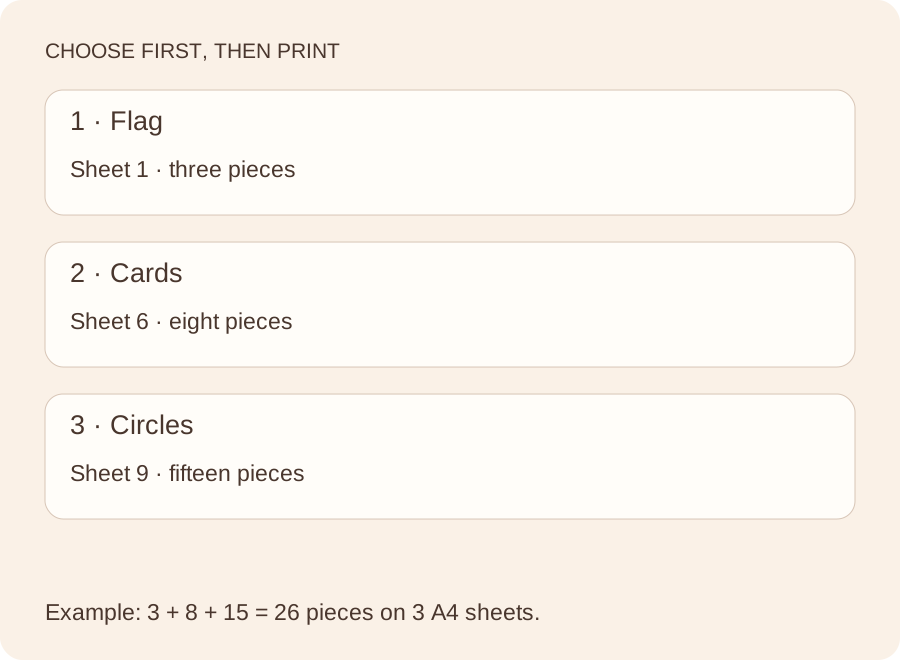
One copy each of pages 1, 6 and 9 gives 3 flags + 8 cards + 15 circles: 26 pieces on three A4 sheets. This excludes cord, backings and an extra proof sheet. For six flags you need two copies of page 1; the cards and circles do not need to be doubled unless required.
Tabs and bands: what to check
An outline alone does not confirm a shape’s purpose. We do not describe pages 2, 5, 7 and 8 as boxes or wrappers with guaranteed capacity. Cut a proof, bring the edges together without gluing and check whether the tabs meet. If a band will surround an object, measure its circumference first and keep the object separate from printed paper.
An alternative using original shapes
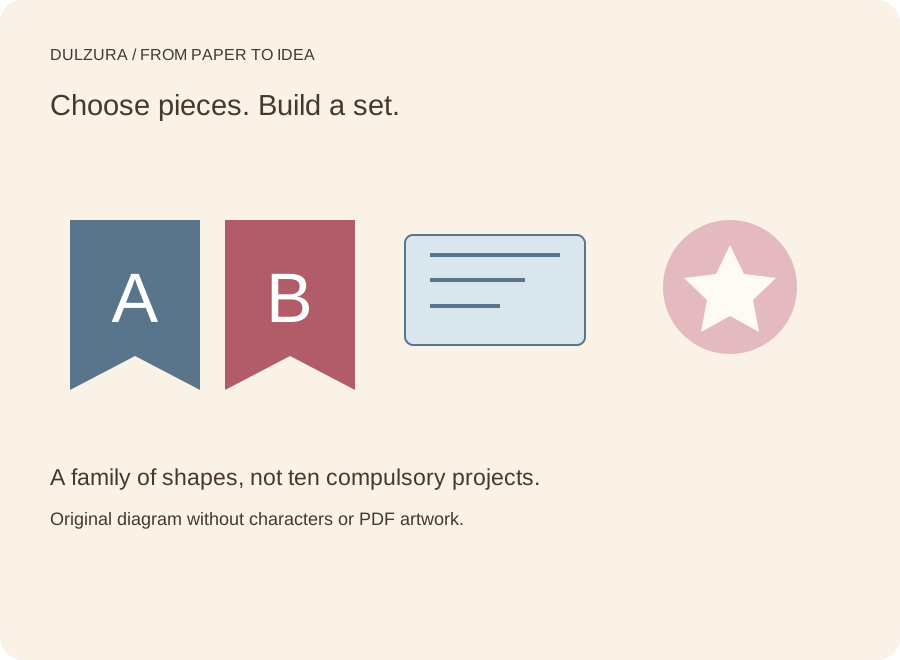
You can use the same plan with plain flags, greeting cards and decorative circles made by you. This guide’s diagram is original and does not reproduce the characters. Hello Kitty belongs to its rights holders; project permission does not grant rights over that mark or make this page an official Sanrio product.
Documents consulted
New text and infographics: Dulzura de Papel. The index was checked against every document page; source names, contents and dates are retained. Our explanatory graphics are available for personal and classroom use.
- imprimible-hello-kitty.pdf · 10 pages · capture 2016-06-06.